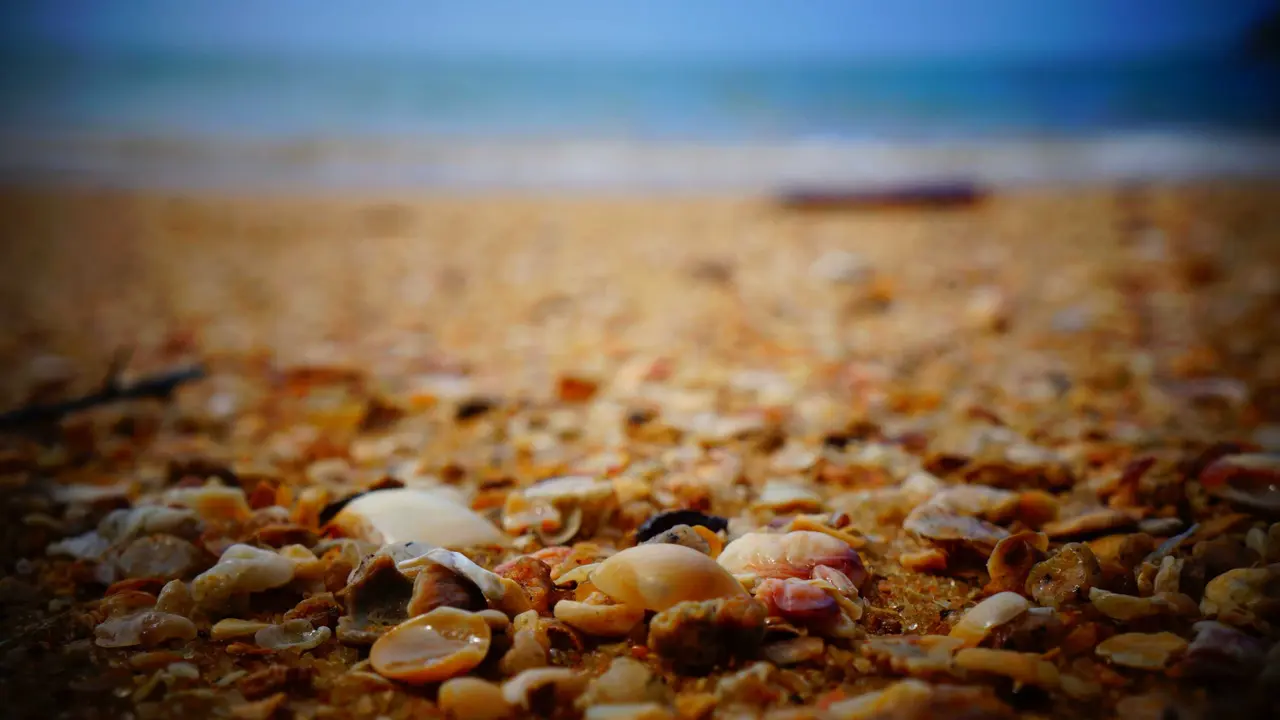
A heavy clam shell sits incongruously in the red dust of the American Southwest. Miles from any coastline, the weathered object appears impossible in such a parched landscape. This marine relic reveals a hidden history of massive inland seas. It serves as a physical bridge between a modern wasteland and a much wetter past. By tracing the movement of tectonic plates, you can see how entire seabeds were transported to the middle of a desert. This single find proves that the Earth's surface is a dynamic, shifting system rather than a permanent fixture. A hiker stops mid-stride in the parched American Southwest. They reach down into the red dust and lift a heavy, weathered clam shell. The object feels out of place. It sits miles from any ocean or river. This find defies the surrounding landscape. The shell is fossilized and rough to the touch, not the smooth plastic of a souvenir. Real desert seashells[5] often carry this rugged, ancient texture. Finding such a marine relic in a dry wasteland creates a massive contradiction. There is a simple, geological explanation for this anomaly. The dry ground under the hiker's boots was once the bottom of a shallow sea. This land was not always a desert. Understanding this shift changes how you view the world. It reveals that the Earth's surface is never truly permanent. The very ground we walk on is part of a dynamic, moving system. What looks like a static landscape is actually a snapshot of a much larger, more unstable process. This single shell serves as a window into deep time. It proves that ancient coastal deposits were uplifted by tectonic activity[5] long after the water vanished. The desert is not just empty sand. It is a graveyard of ancient oceans, waiting for the wind to reveal its secrets.
Ancient oceans covered dry land
Life thrived in these submerged worlds. The sea floors teemed with marine creatures like clams, brachiopods, and trilobites. These animals lived in a bustling, watery ecosystem.
Death changed the landscape forever. When these creatures died, their shells settled onto the muddy sea floor. This process began the long journey of preservation.
Over time, heavy layers of sediment began to pile up. These accumulating layers buried the shells deep underground. This burial protected the remains from the elements. It prevented the shells from decomposing entirely.
Eventually, the organic matter vanished. Only the hard, mineralised structures remained trapped within the rock. This created a hidden archive of life.
What looks like dry sand today was once a vibrant seabed. The shells we find now are fossilised, weathered, and rough. They are no longer the smooth objects they once were. They are simply remnants of a lost world.
This ancient layering set the stage for everything that followed. It created the fossil-rich deposits that tectonic shifts would later lift toward the sun. The history of our planet is written in these buried layers.
Massive plates drive the change
Earth's outer crust is not a solid shell. It is broken into massive, moving pieces called tectonic plates.
These plates float on a hot, semi-liquid layer beneath them. They are constantly shifting, even if we cannot feel it.
Some plates move only a few inches per year. This slow crawl changes the entire map of the world over millions of years.
When these heavy plates collide, the landscape transforms. This collision forces the crust upward in a process known as orogeny.
It is a violent, powerful mechanism. The pressure pushes the seabed high into the sky.
Mountains rise from the sea
This upward thrust turns ancient ocean floors into mountain ranges. The shells once buried in mud are lifted far above sea level.
We see the results in famous peaks like the Atlas Mountains. These heights were once submerged under ancient coastal deposits uplifted by tectonic activity[5].
Similarly, the Rocky Mountains hold the evidence of this deep-time movement. The same forces that built these ranges brought marine fossils to the surface.
What was once a quiet, underwater graveyard becomes a high-altitude landscape. The seabed is no longer hidden by deep water. It is now part of the dry, rugged earth.
This movement is the reason why marine life ends up in arid places. The plates simply refuse to stay still. They push the ocean's history toward the sun.
Erosion exposes the hidden past
Wind and water strip away the Earth's surface. Over millions of years, these forces wear down the top layers of rock. This constant grinding removes the heavy covering of sediment. It eventually reveals the fossil-rich layers buried deep below.
Nature acts as a slow excavator. As the upper stone vanishes, the ancient seabed emerges. This process relies on millions of years of erosion[5] and exposure to the sun. The heavy layers that once protected the shells simply disappear.
Arid environments play a vital role in this reveal. Dry desert air helps protect the remains. In wetter climates, heavy rain and acid could dissolve the delicate structures. The desert's lack of moisture keeps the fossils intact for much longer.
This brings us back to the hiker. The shell they found was not just sitting on the surface. It was hidden under layers of dust and stone. Erosion has just recently uncovered it in that specific spot.
Without this decay, the past would stay hidden. The hiker's discovery is a lucky moment in a massive, ongoing cycle. The wind has finally finished its work.
Reading the rock record
Geologists use these ancient remains to date the Earth's layers. Each fossil acts as a biological timestamp. Because certain species lived only during specific eras, finding them tells scientists exactly how old a rock layer is.
Scientists rely on index fossils for this work. These are specific, widespread species that lived for a short period. They allow researchers to map ancient environments with high precision. By matching these fossils across different locations, experts can reconstruct what the world looked to look like.
Coral fossils provide even more clues about the past. Finding fossilized coral in a dry desert proves the climate was once tropical. These remnants show that heat and moisture once dominated areas that are now arid.
A global pattern emerges from these finds. Identical fossils appear on continents that are now separated by vast oceans. This pattern supports the theory of continental drift. It shows that the landmasses were once joined in a single, massive unit.
This evidence turns a simple desert find into a global map. The rocks do not just hold shells. They hold the history of a changing planet.
Here is what this means for you
These shifting plates drive our modern economy. The same geological forces that pushed ancient seabeds into the desert also trapped vital resources. Many ancient coastal deposits[5] now hold the oil and gas that power much of the world.
This science also impacts your safety. Understanding tectonic shifts helps experts predict seismic activity and natural hazards. When plates move, the ground can shake. The stability of our roads and bridges depends on how we account for these shifts.
We often think of the ground as permanent. But the Earth is a living, moving system. It constantly reshapes the land we live on today. This movement affects everything from where we build cities to how we design infrastructure.
It is a massive, ongoing process. The surface we see is just a temporary snapshot of a much larger story.
The lesson in the stone
The hiker holds a fragment of deep time. That single, weathered shell predates human history by hundreds of millions of years. It is a relic from an era before even the first dinosaurs walked the Earth.
This object serves as a reminder of our planet's true nature. What we perceive as permanent is often just a brief snapshot. The mountains and plains we inhabit are merely temporary stages in a much longer geological drama.
Earth's surface is never truly finished. Tectonic shifts and millions of years of erosion[5] constantly rewrite the map. The dry, arid landscape we see today might one day be swallowed by a rising sea. Conversely, an ocean floor could become the next great mountain range.
Nothing is static.
Every stone carries a hidden narrative. The next time you pick up a rock in the desert, remember its possible past. It may have once rested at the bottom of a warm, tropical ocean. It might have been part of a vibrant, underwater ecosystem long before the first desert sands formed.
The desert is not just an empty expanse of heat and sand. It is a vast, open library of Earth's ancient history. Each fossilized layer is a page, waiting for someone to look closely enough to read it.
The hiker holds a fragment of deep time that predates human history by hundreds of millions of years. This weathered shell is a relic from an era before the first dinosaurs ever walked the Earth. Every stone in the desert carries a hidden narrative, waiting for the wind to reveal its secrets.