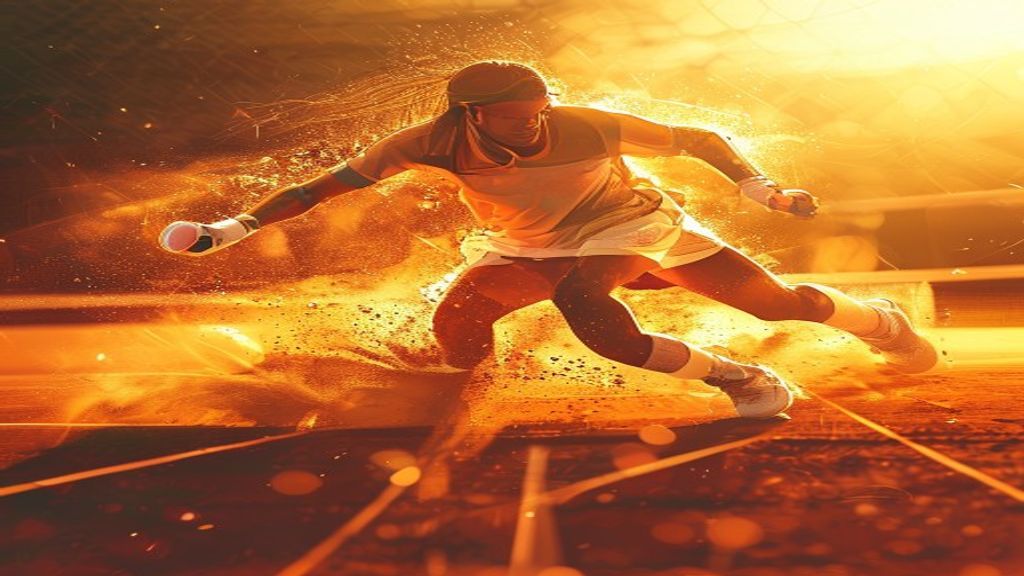
Jakub Mensik lay motionless on the clay court after securing his victory. Extreme temperatures in Paris have turned the Roland Garros surface into a heat trap. The intense sun makes the clay courts act like thermal reservoirs, radiating heat directly back at the athletes. Tournament officials are now monitoring a growing health crisis. As the heatwave intensifies, the extreme weather is fundamentally changing the nature of the competition this year.
The moment the match stopped
Jakub Mensik collapsed on the clay court during his French Open match. The Czech player fell onto the surface and lay there for several minutes after securing a victory over Mario Navone.
Medical staff rushed onto the court as the match came to an abrupt halt. The physical toll of the contest was visible. After his body shut down, Mensik required medical help, ice treatment, and a wheelchair to leave the stadium.
The intensity of the battle was reflected in the clock. This five-set victory lasted 4 hours and 41 minutes[2].
Extreme conditions turned a sporting contest into a health emergency. The heat in Paris reached levels that left the young athlete physically unable to stand. Mensik later described the playing conditions as 'insane'.
For a rising star in the tennis world, the collapse was a frightening sight. The medical urgency highlighted the danger posed by the current weather. The physical strain was not limited to one player, as others also struggled under the sun.
A heatwave is gripping Paris
A severe heatwave is currently impacting the French Open tournament. The extreme weather has turned the clay courts of Roland Garros into heat-retaining surfaces that intensify the physical burden on competitors. This surge in temperature is not an isolated event for the tournament.
Other top players are already feeling the strain. Novak Djokovic played for almost four hours[1] in the intense heat during a recent match. The physical toll of the climate is visible across the entire player field.
The clay holds the heat
Clay courts act as thermal reservoirs during these high-temperature spells. The surface absorbs solar radiation and radiates it back toward the players, making the air near the ground even hotter. This creates a punishing environment for athletes performing high-intensity movements.
Jakub Mensik described the current playing conditions as "insane" following his medical emergency[3]. The combination of high heat and the specific properties of the Roland Garros surface makes the current period particularly dangerous. The physical impact goes beyond simple fatigue.
When the heat reaches these levels, the body struggles to regulate its core temperature. Players face a heightened risk of heat exhaustion and dehydration. The prolonged duration of matches, such as the four hour and 41 minute victory[2] seen in the recent Mensik match, compounds this danger. The longer a player remains on court, the more the thermal load accumulates.
The tournament faces a health crisis
Jakub Mensik's medical status remains the immediate priority for Roland Garros officials. The Czech player left the court in a wheelchair following the physical breakdown.
Medical staff provided ice treatment[3] to manage the heat exhaustion. Whether the rising star can return for his next round depends on how his body responds to the recovery period.
Tournament organisers are now under pressure to review their heat protocols. The incident occurred after a grueling four hour and 41 minute[2] battle.
Pressure mounts on officials
Players are increasingly vocal about the dangers of the current climate. Mensik himself described the playing environment as "insane" playing conditions[3].
This sentiment is not unique to the recent collapse. Novak Djokovic[1] also struggled through almost four hours[1] of intense heat.
Critics are calling for more frequent breaks or shifted schedules. If the heatwave persists, the integrity of the competition is at risk.
There is no word yet on whether match times will be moved to cooler evening slots. The next scheduled matches will be the first real test of the tournament's ability to protect its athletes.
Tournament organisers are now under pressure to review their heat protocols. Whether match times will be moved to cooler evening slots remains the central question. The next scheduled matches will serve as the first real test of the tournament's ability to protect its players.