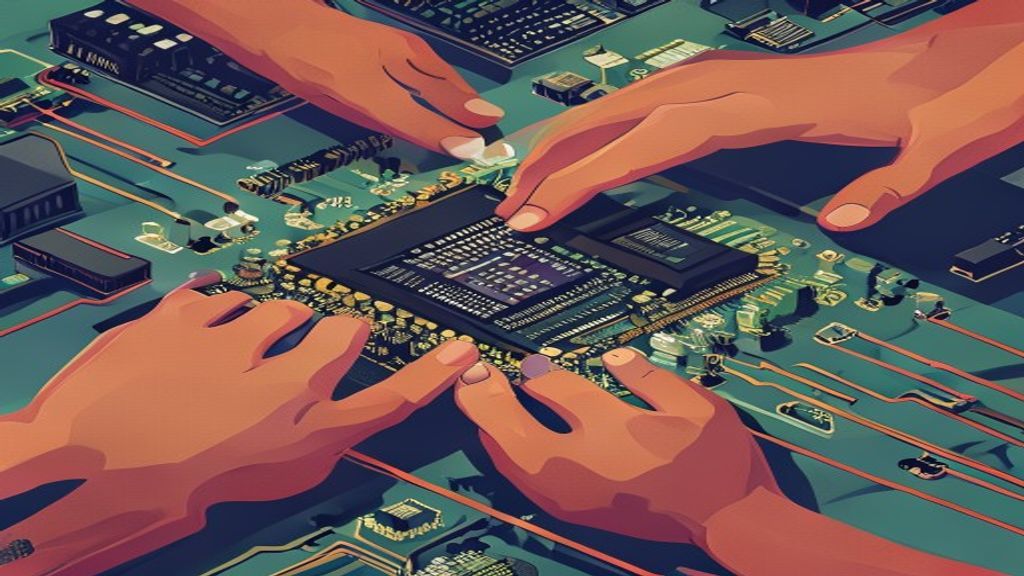
Bridging the Viral Headline to Engineering Reality
The phrase "duct tape arm" describes a legitimate security testing tool built on the AutoProber automation stack. This project serves as a self-contained source-available release candidate designed for controlled lab work.
Duct tape functions strictly as a structural binder for repurposed industrial parts. The visual element is secondary to the engineering framework that powers agent-driven target discovery. The system handles microscope mapping, safety-monitored CNC motion, and probe review with precision.
This is a functional agent-driven discovery system, not a novelty experiment. AutoProber contains Python control code, CAD files, and documentation for complex setups. The license requires a separate commercial agreement for professional deployment while remaining free for authorized testing. Safety-monitored protocols ensure the hardware agent interacts only with targets you are authorized to examine. Computer vision and object detection drive automation without manual intervention for each probe. Flying probe testing becomes a repeatable process rather than a one-off task. The system scales across multiple equipment targets within a single lab environment. See also The Future of Everything is Lies: Navigating the Post-Truth Era. Related coverage: more on technology. Background reading: advanced software engineering. Background reading: Qwen3.6-35B-A3B: Agentic Coding Power.
Hardware Integration: CNC, Vision, and the Old Camera
The AutoProber stack constructs a physical interface between software agents and laboratory hardware. A CNC machine carves the probe holder into a rigid structural skeleton. This rigid foundation resists the mechanical stress of repeated pin probing cycles. Duct tape then secures loose components, providing necessary flexibility without adding bulk.
Commercial robotic arms often use rigid actuators alone, but this setup prioritizes adaptability. Computer vision libraries run on the host machine to process visual streams. These libraries enable real-time object detection within the microscope field of view. The system identifies target pins without manual intervention. This automation reduces the time required for each discovery cycle significantly.
Wired connectivity binds the legacy camera directly to the control loop. Wireless protocols would introduce jitter unacceptable for precise motion sequences. The entire assembly remains a self-contained source-available release candidate ready for lab deployment.
Licensing, Safety, and Commercial Use Constraints
AutoProber runs under the PolyForm Noncommercial License 1.0.0. This framework clearly defines boundaries for who can use the automation stack. Researchers must adhere to these rules before deploying the system in any environment.
The project operates strictly within controlled lab settings. Users may only probe equipment they are authorized to test. This limitation prevents accidental damage to sensitive targets or unauthorized hardware access. Safety considerations remain paramount throughout the entire workflow.
Business applications require a separate commercial license. Organizations cannot simply reuse the open-source release candidate for profit-driven projects. The distinction protects the original developers and ensures responsible deployment practices.
Hardware hacking agents need clear legal guidance before integrating the stack. Compliance with the license terms avoids legal complications later. The dashboard and Python scripts function only within this defined scope.
Microscope mapping and computer vision tools follow the same restrictions. Object detection capabilities serve lab needs but not commercial manufacturing lines. These constraints shape how engineers build their automation pipelines.
The self-contained source-available release candidate remains accessible to eligible users. Authorized teams can download the code and documentation freely. Always verify your project's classification before distribution or sale.