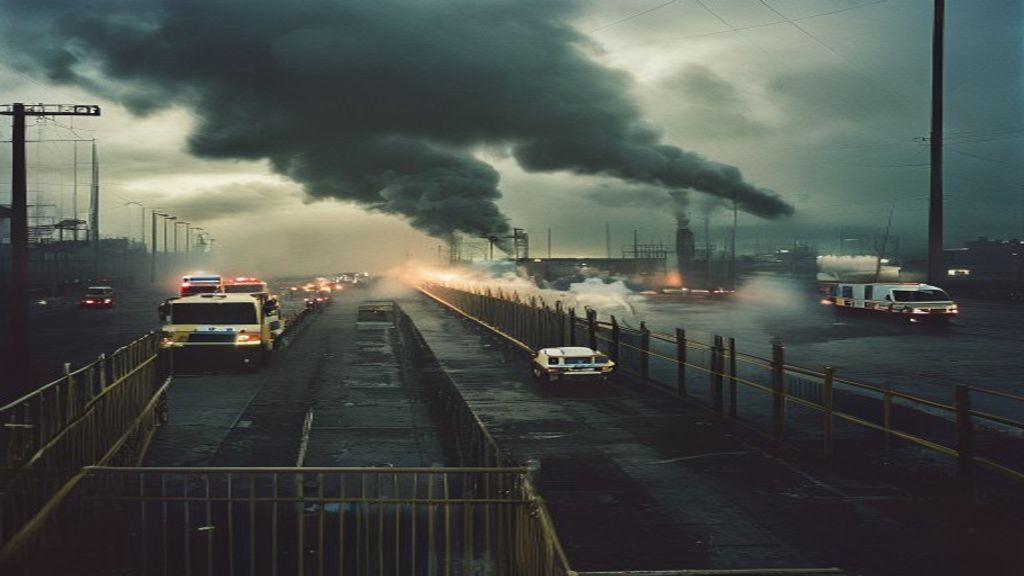
Firefighters extinguished the chemical tank blaze in Southern California overnight. While the immediate risk of a secondary explosion has passed, the danger is not over for local families. Emergency managers are now monitoring air quality levels closely. Residents are still waiting to learn if it is safe to return home. Thousands of people in Garden Grove remain displaced after the blast. The stability of the tank is a matter of intense scrutiny. Officials must now verify that no toxic fumes linger in the residential streets. For those stuck in shelters, the wait is the only certainty.
The silence after the blast
The immediate danger of a catastrophic explosion at the Southern California chemical plant has passed. Officials confirmed the risk was eliminated after an overnight inspection of the damaged tank. Yet the streets of Garden Grove remain empty. The air is thick with uncertainty for residents who still cannot go home.
Maria Gonzalez, 42, a teacher, stood at the perimeter of the evacuation zone on Monday. She watched emergency vehicles idle in the distance. Her car was packed with essentials but left behind her classroom materials. She had no idea when she would return to her students. The silence was louder than the sirens that had kept her awake for days.
Officials declared the explosion threat eliminated at 2 PM. Evacuation orders remain in effect for 40,000 people. The paradox is stark. The fire is out. The tank is stable. But the gates stay shut. Three hours have passed since the last alarm sounded. No one has moved.
Water was sprayed on the overheating tank at the aerospace plant on Friday, May 22, 2026. The incident triggered mass evacuations across Orange County. A crack in the tank relieved pressure and cooled the chemical inside. This physical change helped stabilize the situation. US officials credited overnight monitoring for preventing a disaster. The worst-case scenario was avoided.
But stability is not the same as safety. Fire chiefs confirmed the flames were extinguished. Hazardous material teams are still assessing the site. They need to verify structural integrity. They must check air quality levels. Officials cannot yet assure residents that it is safe to return home. The invisible risks remain.
Residents face lost wages and disrupted school days. The psychological toll of indefinite displacement is mounting. Families are separated from their pets and their possessions. Children are missing critical learning time. Workers are missing shifts without pay. The uncertainty drains energy faster than the heat of the fire ever did.
Craig Covey, a state official involved in the response, acknowledged the frustration. He asked for a little more patience from the community. He stated they are heading in the right trajectory. But he admitted they cannot guarantee safety yet. The wait continues.
An American Red Cross volunteer walked outside Freedom Hall on Monday. The evacuation center in Fountain Valley is full. Tens of thousands of people are displaced. The holiday weekend was ruined by the crisis. Families are sleeping on cots. They are eating donated food. They are waiting for news that never comes.
The event is now recorded as a 2026 industrial disaster. Wikipedia lists it under current events from May 2026. The scale of the response was massive. Emergency crews worked through the night. They monitored the tank temperature. They watched for signs of renewed pressure. Their vigilance saved lives.
Gavin Newsom, the governor, was tagged as a relevant figure in the story. State resources were deployed to support local efforts. The coordination was complex. Multiple agencies had to work together. The goal was containment. The goal was also communication. Keeping the public informed was difficult.
The tank leak fears triggered the mass evacuation. The threat of a toxic explosion was real. The potential damage was catastrophic. Officials acted quickly to clear the area. They prioritized human life over property. That decision saved thousands. It also created a new problem.
The problem is the wait. The wait is long. The wait is uncertain. Residents do not know when they can return. They do not know if their homes are safe. They do not know if their belongings are intact. The answers are not ready.
The silence after the blast is heavy. It is filled with questions. It is filled with fear. It is filled with hope. The hope is fragile. The hope is tentative. The hope is all they have.
Maria Gonzalez checked her phone for updates. She saw no new information. She turned it off to save battery. She sat on the curb and watched the sky. The sun was setting. The day was ending. Another day without home.
The official stance is clear. The fire is out. The explosion risk is gone. But the site is not cleared. The assessment is ongoing. The safety check is incomplete. Residents must wait. They must stay away. They must trust the process.
The process is slow. The process is methodical. The process is necessary. Rushing back could be dangerous. The tank is damaged. The chemical is volatile. The structure is compromised. Caution is the only option. Patience is the only path.
The community is resilient. The community is frustrated. The community is tired. They have been through a lot. They have lost a lot. They are waiting for a lot. The wait is the new normal. The wait is the reality. The wait is the truth.
Why the gates stay shut
The word eliminated means the fire is out. It does not mean the air is clean. Emergency managers use precise language to separate active danger from residual risk. The explosion threat is gone. The chemical hazard remains. This distinction keeps the perimeter locked. It keeps the roads closed. It keeps thousands of people waiting.
A crack in the tank relieved pressure and cooled the chemical[1]. That change stopped the immediate threat. It did not fix the structural damage. The tank is still compromised. It is still leaking. The leak is slow. It is invisible. That makes it harder to manage.
Toxic fumes linger in the soil. They seep into the groundwater. They hang low in the air. Secondary leaks can start at any moment. The metal is fatigued. The heat has weakened the joints. One more shift could cause a rupture. That is why the gates stay shut. Safety comes before speed.
A hazmat worker in a full suit checks a gauge. He stands near the base of the tank. He reads the pressure levels. He notes the temperature drop. He writes the data on a clipboard. His movements are slow. They are deliberate. He knows one mistake could restart the crisis. The suit protects him from the fumes. It does not protect him from the stress.
Fire control is not site clearance. That is the key difference. Fire control means the flames are gone. Site clearance means the area is safe. The two are not the same. Officials must verify both conditions. They must test the air. They must inspect the ground. They must check the water. Only then can they open the gates.
Air monitors are deployed around the zone. They sample the atmosphere every hour. The results take time to process. One bad reading resets the clock. The team must retest. They must reverify. They must ensure the spike was not a trend. This process is slow. It is necessary. It prevents exposure to hidden toxins.
The testing is rigorous. It covers multiple compounds. It checks for particulates. It measures humidity levels. High humidity can trap fumes near the ground. Low humidity can spread them further. The weather changes the risk profile. The team adjusts their methods accordingly. They do not guess. They measure.
Tens of thousands of people remain under evacuation orders[4]. The number is high. It reflects the caution required. The zone is large. The wind can shift direction. A sudden gust could carry fumes into new areas. The perimeter must stay wide. It must stay secure. It must stay enforced.
Even if the site is safe, re-entry is staggered. Officials cannot let everyone return at once. Traffic would gridlock the roads. Emergency vehicles would be blocked. Supplies could not get in. Waste could not get out. The logistics are complex. The plan is phased. Groups return by neighborhood. They return by risk level. They return by priority.
The bottleneck is real. It is not just about safety. It is about order. Chaos helps no one. Gridlock hurts everyone. The staggered approach prevents jams. It ensures a smooth flow. It allows for final checks. It gives time for last-minute adjustments. The process is methodical. It is controlled. It is slow.
Local infrastructure bears the strain. Roads are closed for days. Schools are shuttered for weeks. Businesses lose revenue. Workers miss shifts. The impact extends beyond the danger zone. It ripples through the community. It affects supply chains. It disrupts daily routines. The closure is total. It is strict. It is enforced.
US officials credit overnight cooling and monitoring for stabilizing the tank[3]. The strategy worked. It bought time. It reduced the risk. It did not eliminate the delay. The tank is stable. It is not fixed. The leak continues. The fumes persist. The wait continues.
The definition of eliminated is clear. It refers to catastrophic failure. It refers to explosion. It refers to fire. It does not refer to toxicity. It does not refer to structural integrity. It does not refer to long-term safety. Residents must understand this. They must adjust their expectations. The danger has changed. It has not vanished.
Patience is required. The process is thorough. The stakes are high. Lives are at risk. Health is at stake. The officials are cautious. They are right to be. The data guides the decision. The science drives the timeline. The safety protocols are strict. They are non-negotiable. They are essential.
The gates stay shut for a reason. The reason is safety. The reason is science. The reason is caution. The reason is care. The reason is respect for life. The wait is hard. It is frustrating. It is necessary. The end is not in sight. The path is clear. The steps are steady. The goal is safe.
The long road back home
No definitive date has been set for when residents can return to their homes. The timeline remains fluid. It could be hours. It could be days. Officials have not provided a firm schedule for re-entry. The uncertainty is the new normal for now. This reality persists regardless of the official all clear on the fire itself. The explosion threat is gone. The wait is just beginning.
Shelters are open to receive the displaced. Capacity is straining under the weight of the crisis. Tens of thousands of people in southern California remain under evacuation orders due to the failing chemical tank[4]. Freedom Hall in Fountain Valley serves as a key evacuation center. An American Red Cross volunteer was seen walking outside the facility on Monday, May 25, 2026 . The scene reflects the ongoing effort to house those who cannot go home. Local businesses are offering aid to fill the gaps. Community support is visible but stretched thin.
The economic impact is immediate and severe. Small business owners near the site face lost revenue. Workers miss shifts without pay. The disruption extends beyond the immediate danger zone. Roads remain closed. Schools are shuttered. The local economy is on pause. This financial strain adds to the psychological toll of indefinite displacement. Residents face lost wages. They face disrupted routines. The cost of waiting is high.
A community leader described the resilience and frustration of the displaced. The sentiment is clear. People want to go home. They are tired of waiting. The official stance remains cautious. Officials cannot yet assure residents that it is safe to return home despite the elimination of the explosion threat . We are asking for a little more patience, they said. The request is simple. The wait is hard.
Regulatory aftermath is expected to follow. Investigations into safety protocols are likely. Potential fines for the plant operator are on the table. The event is categorized under current events from May 2026 and 2026 industrial disasters in Wikipedia records . This classification signals the significance of the incident. Accountability will be a focus in the coming weeks. The plant operator faces scrutiny. Safety standards will be reviewed.
Residents need clear next steps. Check evacuation zones regularly. Official updates are posted online. Shelter information is available through local emergency management channels. The next update comes at 6 PM. This schedule provides a rhythm to the uncertainty. Residents can plan around it. Information is key. Staying informed helps manage the wait.
The fire is out. The threat is eliminated. The risk of a catastrophic explosion of a damaged chemical tank in Southern California has been eliminated following a close overnight inspection . A crack in the tank has relieved pressure and cooled the chemical . US officials credit overnight cooling and monitoring for stabilizing the tank . Water was sprayed on a tank that overheated at an aerospace plant in Garden Grove, Calif., on Friday, May 22, 2026 . These actions prevented a worse outcome. The immediate danger is past. The long road back home remains.
The path forward is clear. The steps are steady. The goal is safe. Residents must stay put for now. The wait continues. The next update will bring new information. Until then, patience is required. The community endures. The support systems hold. The road back is long. It is also necessary. Safety comes first. The end is not in sight. But the direction is right.
The next update from emergency management is expected at 6 PM. Residents should continue to check official channels for changes to the evacuation perimeter. Until the site is cleared, the road back to Garden Grove remains closed.