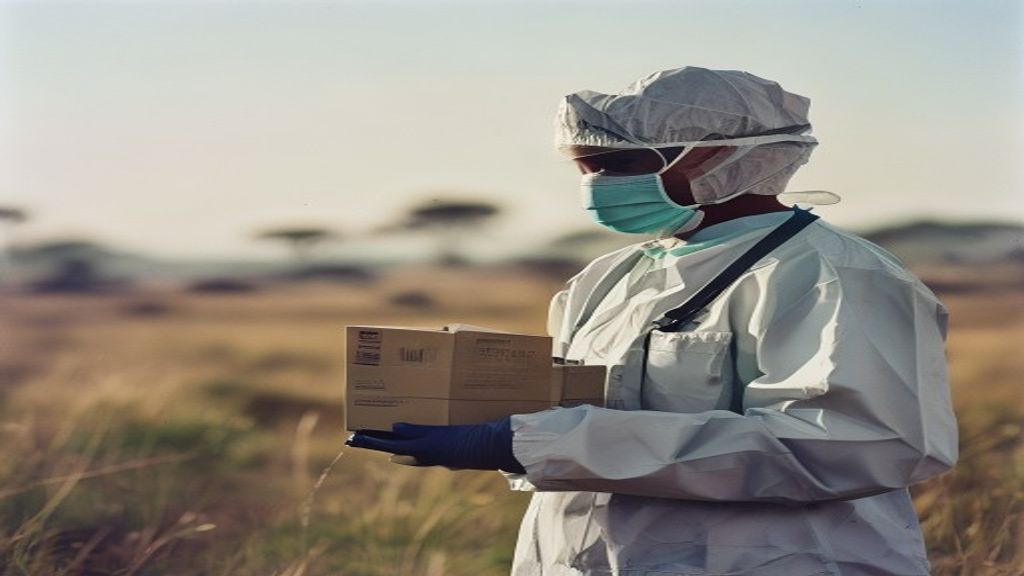
South Africa pledged $5 million to fight the Ebola outbreak. The money supports a continental response plan. This crisis is Africa's second-largest Ebola outbreak in history. The pledge aims to stop the virus from spreading further. It targets rapid containment in affected regions. The funds help prevent cross-border transmission to neighboring nations. South Africa acts as a key donor in this effort. The Department of Health confirmed the financial commitment. The goal is to limit the geographic reach of the virus. This approach prioritizes speed over long-term infrastructure projects. The cash is intended for immediate operational needs. It supports treatment centers and surveillance teams on the ground. The outbreak poses a direct threat to regional stability. South Africa seeks to protect its own borders from spillover. The continental plan requires $319 million in total funding. South Africa's share covers a small but critical portion. The money helps sustain daily operations in hot zones. It ensures that health workers have the resources they need. The virus spreads quickly in areas with weak health systems. Rapid funding can slow that momentum significantly. The pledge reflects a shift toward localized response capacity. African nations are taking more responsibility for their own security. This reduces reliance on external aid for initial containment. The funds likely support medical supplies and personnel deployment. They may also finance community education campaigns. These measures are essential for breaking chains of transmission. The outbreak has already strained local healthcare facilities. Treatment capacity is rising in the DR Congo response. Health workers are treating patients with advanced therapies. Fourteen people have received the MAb114 monoclonal antibody. This treatment improves survival rates for infected individuals. The drug is expensive and requires cold chain logistics. South Africa's funding helps cover these high costs. The virus is a viral hemorrhagic fever with high mortality. It attacks the body's internal systems rapidly. Early detection is the best defense against spread. The pledge supports testing kits and mobile clinics. These tools reach remote communities before the virus arrives. The strategy focuses on isolation and contact tracing. These methods proved effective in previous outbreaks. Guinea and DRC contained 2021 outbreaks in months. They used stronger surveillance and lab capacity. South Africa hopes to replicate that success now. The $5 million is an initial contribution to the effort. It signals political will to combat the crisis. Other nations are expected to follow suit with their own pledges. The speed of the response is critical to success. Every day of delay increases the risk of wider spread. The funds are earmarked for immediate deployment. They will not sit in reserve accounts for long. Health officials are already planning their allocation. The money goes directly to response coordinators in the field. This ensures that resources reach the front lines quickly. The outbreak threatens to overwhelm local governments. South Africa's aid provides a buffer against collapse. It keeps essential services running during the crisis. The virus does not respect national borders. Containment requires a unified regional approach. The pledge supports that collaborative framework. It strengthens the network of health security across the continent. The funds are a down payment on future stability. They buy time for more comprehensive solutions to develop. The immediate priority is stopping the current wave. South Africa is investing in that priority now. The Department of Health oversees the disbursement process. They work with local partners to maximize impact. The goal is measurable reduction in new cases. The money is a tool to achieve that end. It is not a permanent fix for systemic issues. But it addresses the urgent threat at hand. The outbreak demands a swift and coordinated reaction. South Africa has provided the financial spark for that reaction. The response is already gaining traction in affected areas. Health systems are adapting to the new pressure. The $5 million pledge is a tangible sign of support. It demonstrates that regional cooperation is possible in crisis. The funds will likely be spent within months. They will fuel the fight against the virus. The stakes are high for the entire continent. South Africa is betting on containment now. The alternative is a much larger and costlier disaster. The pledge is a calculated move to prevent that outcome. It aligns with broader public health objectives. The money is already changing the landscape of the response. It gives health workers the tools they need. It gives communities a chance to survive. The cash is hitting the ground running. The impact will be felt in the coming weeks. The fight against Ebola is far from over. But this pledge marks a decisive step forward. South Africa is leading by example in this crisis. Other nations are watching closely to see the results. The effectiveness of the funding will be judged by case numbers. A drop in infections would validate the strategy. A rise would signal a need for more resources. The $5 million is a start, not the finish line. But it is a necessary and powerful start. The continent is mobilizing to save lives. South Africa's contribution is a key part of that mobilization. The virus is deadly, but it is not unbeatable. With the right resources, it can be contained. The pledge provides those resources. The response is underway. The clock is ticking. South Africa is helping to stop it.
Why this outbreak matters now
The current crisis is not a repeat of the 2014 disaster. Africa is mobilising to combat its second-largest Ebola outbreak in history[1], a scale that demands immediate attention but does not yet match the catastrophic spread of a decade ago. The West Africa epidemic of 2014-2016 killed thousands and exposed deep systemic failures in global health security. That tragedy reshaped how nations prepare for viral hemorrhagic fevers. It also set a high bar for what constitutes a manageable response.
The difference today lies in speed and detection. During the earlier epidemic, factors contributed to the undetected spread of the Ebola virus[4] that allowed it to cross borders before anyone realized the danger. Communities lacked trust in health workers. Surveillance systems were fragmented. By the time the world reacted, the virus had already taken root in multiple capitals. The response was reactive, not proactive. The cost was measured in lives and economic stability.
Recent outbreaks have proven that better systems work. Guinea and the Democratic Republic of Congo contained 2021 Ebola outbreaks in months[3] thanks to stronger surveillance, lab capacity, and response systems. Health officials now identify clusters faster. They deploy vaccines more efficiently. The tools exist to stop the virus before it becomes a pandemic. The challenge is no longer technical. It is logistical and financial. Resources must reach the right places at the right time.
The current situation in the DR Congo shows both progress and peril. Treatment capacity is rising in the DR Congo Ebola outbreak response[2], with new isolation units opening in hotspots. Patients are receiving care that would have been unavailable a decade ago. Fourteen people have been treated with the MAb114 monoclonal antibody, a therapy that significantly reduces mortality rates. This medical advance is critical. It saves lives and reduces the viral load in communities. But treatment centers are still scarce in remote areas.
Porous borders remain the greatest threat to regional stability. The affected nations share long, lightly monitored frontiers with neighbors. Travelers move freely for trade, family, and work. A virus that crosses one border can quickly reach another. South Africa, as the continent's largest economy, has a vested interest in preventing cross-border spread. An uncontrolled outbreak in Central Africa could disrupt supply chains, tourism, and labor flows across the entire region. The economic stakes are high. The health stakes are higher.
Healthcare systems across the continent are already under strain. Years of underinvestment have left many hospitals with limited ICU beds, insufficient personal protective equipment, and overstretched staff. Adding a major Ebola response to existing burdens risks collapsing routine care. Maternal health, malaria treatment, and HIV services could suffer if resources are diverted. Localized response capacity is not just a nice-to-have. It is a necessity. Without it, even a contained outbreak can trigger a broader health crisis.
The continental preparedness plan addresses these gaps directly. The initiative is valued at $319 million[1], a figure that reflects the scale of the challenge. South Africa's $5 million pledge is a fraction of that total. It is a signal of solidarity and a down payment on shared security. Other donors must follow suit. The window for effective intervention is narrow. Every day of delay increases the risk of wider transmission.
Ebola disease is a viral hemorrhagic fever[6] that strikes quickly and kills without warning. It does not discriminate by wealth or status. It targets the vulnerable first. The elderly, the poor, and those in rural areas bear the brunt of the impact. Their access to care is often the last to be restored. The moral imperative is clear. The practical one is equally urgent. A failure to contain this outbreak will cost more than money. It will cost trust in the system.
The lessons of the past are clear. Early detection saves lives. Rapid deployment stops spread. Community engagement builds trust. These principles are not new. They are proven. The question now is whether the world will act on them. The tools are ready. The knowledge is there. The funding is the missing piece. Without it, the best plans remain paper exercises. With it, the outbreak can be halted. The choice is straightforward. The time to decide is now.
What happens next for the continent
The $5 million pledge is a drop in the ocean. The total continental Ebola preparedness and response plan requires $319 million to succeed[1]. South Africa's contribution covers only 1.5 percent of that total. The remaining $314 million must come from other donors, international financial institutions, and affected governments. Without that capital, the containment strategy stalls. The virus does not wait for budget approvals.
Deployment timelines remain tight. Resources need to reach the ground within weeks, not months. Every day of delay allows the virus to move deeper into communities. Health workers are already on the front lines. They need protective gear, testing kits, and isolation units. The money must convert into physical assets quickly. Logistics teams are racing to clear customs and transport supplies to remote clinics. Speed is the only metric that matters now.
Coordination is the other critical factor. South Africa is not acting alone. The African Union, the World Health Organization, and local governments are aligning their efforts. This multi-agency approach prevents duplication and waste. It ensures that aid reaches the hardest-hit areas. Local health ministries know the terrain. They understand the cultural barriers to treatment. International bodies bring technical expertise and funding. The partnership model worked in previous outbreaks. It must work again.
Treatment capacity is already rising in the DR Congo. Health officials report that response efforts are gaining traction. Treatment capacity is rising in the DR Congo[2] as new facilities open. Patients are receiving care faster than before. The MAb114 monoclonal antibody is being used to treat severe cases. 14 people have been treated with the MAb114 monoclonal antibody[2] so far. This drug reduces mortality rates significantly. Scaling up access to it is a priority. The funding helps buy more doses and train staff to administer them safely.
But the money has limits. The $5 million pledge does not cover long-term infrastructure. It does not build new hospitals or upgrade national lab networks. It does not fund the years of research needed for a universal vaccine. It is an emergency stopgap. It buys time to contain the current flare-up. It does not solve the systemic weaknesses in African health systems. Those require sustained investment. Donors must commit to multi-year funding streams. Otherwise, the continent remains vulnerable to the next shock.
The gap between emergency aid and structural reform is wide. Past outbreaks taught hard lessons. Guinea and DRC contained 2021 Ebola outbreaks in months[3] thanks to stronger surveillance. Better lab capacity made a difference. Faster response systems saved lives. Those gains were fragile. They relied on temporary funding and external support. When the money dried up, some capabilities eroded. The current crisis tests whether those systems are now permanent. It tests whether the lessons of the past decade have stuck.
The next milestone is the upcoming AU health summit. Leaders will review progress and pledge additional funds. The summit is a chance to lock in long-term commitments. It is also a moment of accountability. Governments must show where the money went. They must prove that the virus is receding. Transparency builds trust. Trust attracts more donors. The cycle must be positive. If the summit fails to secure more capital, the response falters. The stakes are too high for half-measures.
The WHO will release its next case count update soon. That data point is critical. It shows whether the curve is flattening. It reveals if the containment measures are working. Health officials watch these numbers closely. A rise in cases signals failure. A drop signals hope. The data drives every decision. It determines where to send more teams. It guides the allocation of scarce resources. The world is watching. The continent is waiting.
Preventing a resurgence is the ultimate goal. A new wave could destabilize the region. It could halt economic recovery. It could undo years of development progress. Poverty and disease are linked. When health systems collapse, economies follow. The ripple effects spread beyond borders. Trade slows. Tourism drops. Investment dries up. The cost of inaction is far higher than the cost of action. The $5 million is a start. It is not the finish line.
The path forward is clear but steep. More money is needed. More coordination is required. More political will is essential. The tools exist. The knowledge is there. The will must match the capability. The next few weeks are decisive. They will determine the trajectory of the outbreak. They will shape the future of public health on the continent. The clock is ticking. The work continues.
The next milestone is the upcoming AU health summit. Leaders will review progress and pledge additional funds to bridge the massive $314 million deficit. The effectiveness of this response will be judged by the next official case count update.