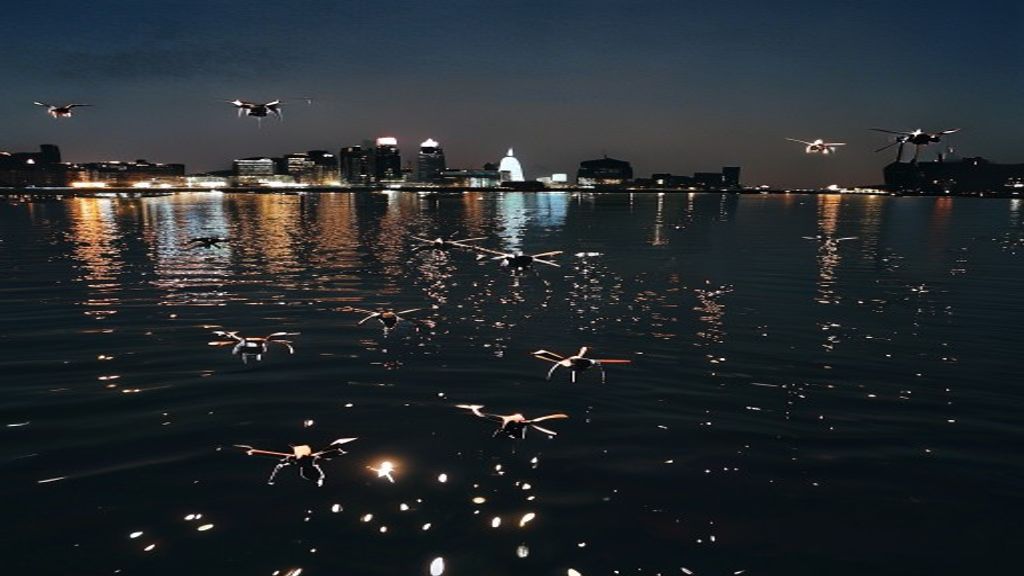
Eighty-nine drones plummeted into Darling Harbour during the Vivid Sydney display. The sudden crash forced organisers to cancel all remaining drone shows immediately. Thousands of festival-goers watched the formation break apart over the water. Organisers have yet to explain what caused the technical failure. The incident has stripped the sky from the city's most famous light festival. As investigators examine the wreckage, the future of the aerial spectacle remains uncertain. Vivid Sydney organizers cancelled all remaining drone displays after a major incident. Eighty-nine units detached from their formation and plunged into Darling Harbour. The crash halted the 'Star-Bound' performance immediately. Emergency services were deployed to secure the area. No injuries were reported among the crowd or in the water. The spectacle had drawn thousands to the waterfront. Vivid Sydney is a major cultural and economic driver for the city. Local businesses rely on the foot traffic generated by the festival. The sudden cancellation disrupted plans for attendees and vendors alike. The incident casts a shadow over the remainder of the event. The scene unfolded during Monday night's performance. Drones were arranged in complex patterns above the water. Suddenly, the formation broke apart. Units fell silently into the dark water. Spectators on the promenade watched in shock. The show stopped instantly. Silence replaced the ambient music. Organizers moved quickly to address the situation. They issued a statement confirming the cancellation. The 'Star-Bound' shows for Tuesday 26 and Wednesday 27 May are off. Four performances have been scrapped in total. The decision was made to prioritize public safety. Organizers cited unforeseen technical difficulties as the cause. The official response emphasized caution. Public safety remains the absolute priority for Vivid Sydney. The organizers apologized for the disappointment caused by the cancellation. They acknowledged the impact on ticket holders and attendees. The statement was clear and direct. No further drone flights will occur until the issue is resolved. Emergency protocols were activated immediately after the crash. First responders secured the promenade and the water. They ensured no debris posed a risk to swimmers or boaters. The area was checked for any hazards. The response was swift and coordinated. No injuries were found among the crowd or in the water. The incident highlights the risks of large-scale drone shows. These displays rely on precise technology and coordination. A single failure can cascade into a total breakdown. The complexity of managing hundreds of units is immense. Any glitch can have immediate and visible consequences. The safety of the public must always come first. Ticket holders are now facing uncertainty. They are eligible for refunds or show credits. The organizers have not yet decided on future dates. The drone show scheduled for Sunday 31 May is still in question. Further updates will be provided when available. Attendees are advised to check official channels for news. The economic impact of the cancellation is significant. Vivid Sydney attracts visitors from across the region. Local businesses lose revenue when major events are disrupted. The festival is a key part of Sydney's cultural calendar. The cancellation affects more than just the drone show. It impacts the broader experience of the festival. The incident has drawn attention to the technology behind the displays. Drone shows are becoming increasingly popular at major events. They offer a unique visual experience that traditional fireworks cannot match. However, they also come with inherent risks. The complexity of the technology requires rigorous testing and maintenance. Any failure can have serious consequences. The organizers are working to understand what went wrong. An investigation is underway to determine the cause. The results will inform future decisions about drone shows. Safety protocols may be reviewed and updated. The incident serves as a reminder of the challenges involved. Large-scale public events require careful planning and execution. The community response has been mixed. Some attendees expressed disappointment at the cancellation. Others praised the organizers for prioritizing safety. Social media reactions highlighted the shock of the incident. Videos of the crash spread quickly online. The incident has sparked debate about the risks of drone technology. The future of drone shows at Vivid Sydney is uncertain. Organizers have not ruled out their return entirely. However, no decisions have been made regarding the Sunday 31 May show. The festival will continue with other installations and events. The focus will shift to light and sound displays. The incident has raised questions about the reliability of drone technology. These shows depend on precise GPS and communication links. Any disruption can lead to a loss of control. The risks are real and must be managed carefully. Safety must always be the top priority. The organizers are committed to resolving the issue. They are working with technical experts to investigate the cause. The results of the investigation will be shared with the public. This transparency is crucial for maintaining trust. The incident has highlighted the need for robust safety measures. The impact on local businesses is also a concern. Vivid Sydney is a major economic driver for the city. The cancellation of the drone show affects foot traffic and revenue. Local businesses rely on the festival for income. The incident has created uncertainty for many. The organizers are working to mitigate the impact. The incident has drawn attention to the broader context of drone technology. These shows are becoming increasingly popular at major events. The organizers are working to ensure the safety of all attendees. They have implemented additional safety measures in response to the incident. These measures include enhanced monitoring and communication protocols. The goal is to prevent any future occurrences. The safety of the public remains the absolute priority. The incident has sparked a broader conversation about the role of technology in public events. Drones offer new possibilities for visual storytelling and entertainment. However, they also pose new challenges and risks. The balance between innovation and safety must be carefully managed. The incident serves as a cautionary tale for the industry. The organizers are committed to learning from this experience. They are reviewing their safety protocols and procedures. The goal is to prevent any future incidents. The incident has highlighted the need for continuous improvement. The future of Vivid Sydney remains bright. The organizers are working to ensure a memorable experience for all attendees. The incident has not diminished the appeal of the festival. It remains a key part of Sydney's cultural calendar. The incident has raised important questions about the future of drone shows. These displays offer a unique visual experience. Safety must always be the top priority. The organizers are working to resolve the issue. They are investigating the cause of the crash.
Why the drones fell out of the sky
The exact cause of the crash remains unknown. Organizers have not released a technical report. They only cited "unforeseen technical difficulties" in their official statement blaming the malfunction on technical issues[1]. This vagueness leaves the public guessing. It also highlights the complexity of modern aerial displays.
Modern drone shows are not just flying cameras. They are synchronized swarms. Hundreds of units move in unison. They rely on precise GPS coordinates. They depend on real-time data links. A single packet of lost data can break the formation. The system must update every drone's position constantly. If one unit misses a signal, it drifts. If many units miss signals, the pattern collapses.
The Vivid Sydney display involved a large fleet. The scale increases the risk. More drones mean more potential points of failure. Software glitches are common in complex systems. Communication failures can happen in crowded radio spectrums. Urban environments create interference. Tall buildings block satellite signals. These factors combine to create a fragile ecosystem. The sky above Darling Harbour is not empty. It is filled with invisible data streams.
Safety mechanisms exist to prevent crashes. Drones are designed with fail-safes. They should land automatically if they lose connection. They should hover if they detect an obstacle. This incident suggests those systems did not trigger. Or they triggered too late. The drones plunged into the water. They did not land safely on the promenade. This raises questions about the reliability of current technology.
Large-scale swarms push the limits of engineering. Scaling up from dozens to hundreds of units changes the physics. It changes the software requirements. It changes the margin for error. What works for a small group may fail for a large one. The coordination required is immense. The processing power needed is high. The latency must be near zero. Any delay can cause a cascade failure. One drone moves wrong. The next one corrects for it. The next one overcorrects. The whole formation destabilizes.
The investigation is ongoing. No definitive cause has been released. Engineers are likely reviewing flight logs. They are checking software code. They are analyzing radio frequencies. This process takes time. It requires careful analysis. Rushing to a conclusion could be dangerous. It could hide the real problem. The priority is understanding the root cause. Not just fixing the immediate issue.
The environmental impact is another concern. Eighty-nine drones fell into the harbour. They are not just plastic and metal. They contain batteries. They contain electronic components. These materials can leak into the water. Cleanup efforts are required. Workers must retrieve the debris. They must ensure no harm comes to marine life. The harbour is a public space. It is also an ecosystem. Protecting it is part of the responsibility.
The incident highlights vulnerabilities in large-scale swarms. We assume technology is infallible. We trust the machines to behave. This crash proves otherwise. Machines can fail. Software can glitch. Signals can drop. The illusion of control is fragile. When the lights go out, the reality sets in. The drones are just objects. They obey physics. They do not obey intentions.
Public safety remains the absolute priority for Vivid Sydney according to their official statement. This is a standard response. It is also a necessary one. Lives are at risk. Property is at risk. Trust is at risk. The organizers must prove they can manage the technology. They must show they understand the risks. They must demonstrate they have control.
The technical details are complex. The implications are simple. We need better safety standards. We need more transparency. We need honest answers. The current explanation is insufficient. "Technical difficulties" is a placeholder. It is not a diagnosis. It does not explain why the fail-safes failed. It does not explain why the drones fell. It does not explain how to prevent it next time.
The cleanup continues in the harbour. Divers are likely searching the depths. They are retrieving the wreckage. They are assessing the damage. This is a slow process. It is a messy process. It is a reminder of the physical reality. The digital display has a physical cost. The lights have weight. The code has consequences. The sky is not just a canvas. It is a shared space.
The investigation will take time. The answers may not be easy. The technology is evolving. The risks are growing. We must adapt our expectations. We must demand higher standards. We must question the assumptions. The show must go on. But the safety must come first. Always.
The next steps are unclear. No decisions have been made regarding future shows for the remainder of the season. The organizers are waiting. They are analyzing. They are planning. The public is waiting. They are watching. They are wondering. The sky above Sydney is quiet now. The drones are silent. The questions remain.
What happens next for Vivid Sydney
The festival continues without the sky. Vivid Sydney organizers confirmed that the light installations and music events remain on schedule for the rest of the season. The drone spectacle is gone. Four performances have already been cancelled. The 'Star-Bound' shows planned for Tuesday 26 May and Wednesday 27 May are off the calendar. No decisions have been made regarding the final show on Sunday 31 May. Organizers said they will provide further updates when available. The core experience remains intact. Visitors can still walk the illuminated streets. They can still hear the live music. The harbor lights still glow. The only change is the absence of the aerial display. This is a partial retreat. It is not a total shutdown. The festival survives. It just looks different now.
Ticket holders face a simple choice. They can claim a refund. They can take a show credit. The policy is clear. The organizers stated that ticket holders are eligible for refunds or show credits following the cancellation. This applies to the four cancelled performances. It does not apply to the general admission events. Those tickets remain valid. The financial impact is contained. It is not catastrophic. Sponsors have not pulled out. The budget holds. The costs are manageable. The refund process is automated. Customers log in. They select their tickets. They choose their option. The money returns. Or the credit stays. The system works. It is standard procedure. It is not unique to this incident. It is how events handle disruption. The difference here is the scale. The difference is the visibility. Everyone saw the drones fall. Everyone knows the show changed. The refund policy is the safety net. It catches the disappointed. It keeps the anger down. It preserves the brand. It buys time. It buys trust. It is a small victory. It is a necessary one.
The community reaction is mixed. Social media is loud. Some people are angry. They paid for a show. They did not get it. They want their money back. Others are relieved. They are glad no one was hurt. They appreciate the quick response. They trust the organizers. The sentiment is divided. It is not unified. It is human. People react differently to risk. Some see danger. Some see excitement. The drone show was popular. It drew crowds. It created buzz. It generated revenue. Now it is gone. The silence is noticeable. The online chatter reflects this. Posts show photos of the empty sky. Comments ask about safety. Questions pile up. Will it happen again? Is it safe? Who is responsible? These are valid questions. They deserve answers. The organizers have not provided them yet. They are waiting. They are investigating. They are cautious. This is wise. It is responsible. It is the right move. Rushing to judgment helps no one. Rushing to blame helps no one. Patience is key. Transparency is key. Trust is key. The community wants to believe. They want to enjoy. They want to feel safe. The organizers must deliver on all three. It is a tall order. It is a necessary one.
Future regulations may tighten. This incident highlights a risk. Large-scale drone swarms are complex. They require precision. They require control. They require oversight. A minor error can cascade. A single glitch can fail. The technology is new. The rules are evolving. This crash may change that. Regulators may step in. They may demand stricter protocols. They may require more testing. They may limit the number of units. They may ban certain areas. The pressure is mounting. The scrutiny is increasing. The public is watching. The media is watching. The government is watching. This is a moment of truth. It is a test of resilience. It is a test of innovation. The industry must adapt. It must improve. It must prove itself. Safety is non-negotiable. Public trust is fragile. One mistake can undo years of progress. The stakes are high. The consequences are real. The lessons are clear. The path forward is narrow. It requires care. It requires caution. It requires confidence. The organizers know this. The regulators know this. The public knows this. The question is not if. The question is how. How will they respond? How will they change? How will they move forward? The answer matters. It matters for Sydney. It matters for the industry. It matters for the future. The clock is ticking. The pressure is on. The spotlight is bright. The eyes are open. The wait begins. The report is coming. The truth will out. The record will be set. The precedent will be made. The history will be written. The story is not over. It is just starting. The next chapter is unwritten. The next move is theirs. The next step is clear. The festival continues. The lights stay on. The music plays on. The drones stay down. For now. At least. For now.
The investigation into the technical failure is ongoing. Organisers are currently reviewing safety protocols to determine if the Sunday 31 May show can proceed. The results of this inquiry will dictate the future of drone technology in Sydney's public spaces.