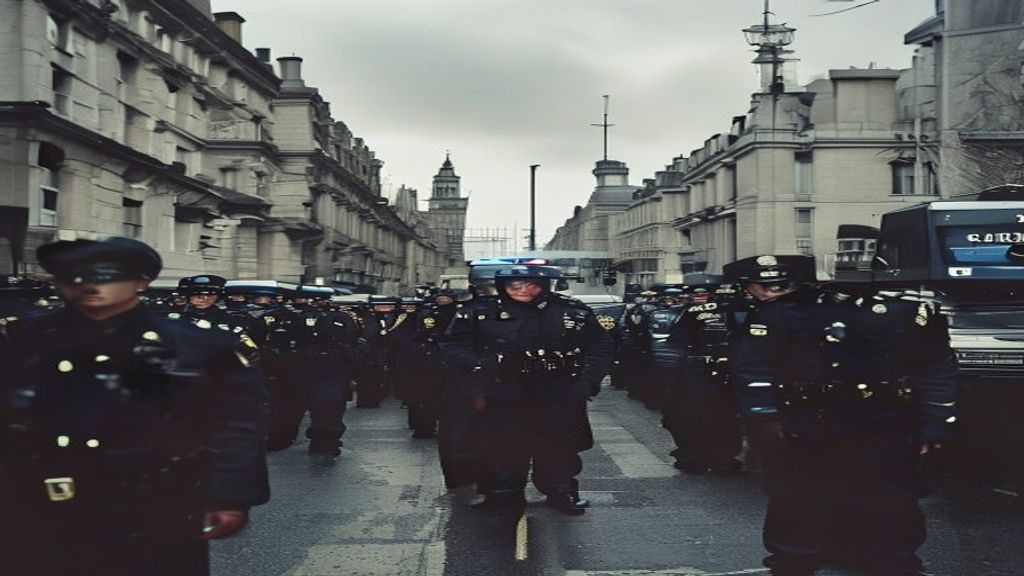
Metropolitan Police are deploying 4,000 officers to manage dual protests in Central London. Armoured vehicles and heavy police units are moving into high-traffic pedestrian zones. The scale of the operation aims to prevent clashes between opposing groups.
Authorities have issued a zero-tolerance warning for any breach of the peace. Specific areas across the capital face significant road closures as specialist units take their positions. The police mandate focuses on preventing violence between the Palestine Coalition and Unite the Kingdom demonstrators.
The scale of the London deployment
Metropolitan Police officers are flooding Central London to manage a day of dual protests. The force is deploying 4,000 officers to prevent clashes between opposing groups. This operation could become one of the busiest days for policing in the capital in recent years.
Two distinct demonstrations are scheduled to take place on the same day. The Palestine Coalition and Stephen Yaxley-Lennon, representing Unite the Kingdom, are both expected to march through the city. Authorities are preparing for the potential for violence between these opposing factions.
Specialist resources are being positioned at key junctions to manage the crowds. The deployment includes armoured vehicles, helicopters, and drones. Police are also using dog units, horses, and live facial recognition technology to monitor the streets.
Officers are also using dedicated investigative teams to track any criminal activity. The police have communicated a zero-tolerance approach[2] to unlawful speech at the events. Any breach of the peace will be met with immediate action.
A heavy presence on the streets
Police units are concentrated around central landmarks and high-traffic pedestrian zones. Officers are monitoring movement between the two protest sites to prevent incursions. This strategy aims to keep the Palestine Coalition and the Unite the Kingdom group separated.
Armoured vehicles are positioned at key junctions. The use of armoured vehicles[1] marks a visible escalation in policing tactics. This heavy equipment sits alongside helicopters, drones, and dog units.
Specific checkpoints have been established to regulate the flow of demonstrators. These stations allow police to monitor the crowd as it moves through the capital. The operation is one of the busiest days for policing in London[1] in recent years.
Security is tight.
Specialist resources are also being used to track activity. The deployment includes live facial recognition and police horses. These tools are intended to manage the scale of the dual demonstrations.
The zero-tolerance mandate
Against that backdrop, the next thread concerns The zero-tolerance mandate. Reports point to Metropolitan Police officials have warned that any breach of the peace will face immediate arrest. Read alongside the wider context, the significance becomes clearer.
A defining feature of the situation is The policy targets specific offences including obstruction of the highway and harassment. How it lands depends on what other parties choose to do next. Sources describe Legal experts note the high threshold for arrests under the current public order framework. That observation sits at the centre of how this story is being interpreted. Documentation indicates Police commanders are coordinating with local councils to manage street-level disruptions. Whether it holds steady or shifts will inform what follows. Among the verified facts, The Metropolitan Police will deploy 4,000 officers across Central London for a day of protest. One of the documented points reads: Specialist resources deployed include live facial recognition, helicopters, drones, dog units, police horses, armoured vehicles and dedicated investigative teams.
Observers from adjacent sectors have begun to weigh in. There is little doubt the situation will move further as new information surfaces.
The next part of this piece looks at the practical implications.
A defining feature of the situation is Police commanders are coordinating with local councils to manage street-level disruptions. Public confirmation indicates The Metropolitan Police will take a zero-tolerance approach to unlawful speech at the events.
It has been documented that Metropolitan Police officials have warned that any breach of the peace will face immediate arrest. Among the verified facts, The operation is described as having the potential to be one of the busiest days for policing in London in recent years. For many of those involved, the trajectory matters as much as the immediate facts.
Reports point to The policy targets specific offences including obstruction of the highway and harassment. One of the documented points reads: The Metropolitan Police will deploy 4,000 officers across Central London for a day of protest. The reaction so far has been mixed, with several stakeholders still gathering information.
A defining feature of the situation is Legal experts note the high threshold for arrests under the current public order framework. On the record, Specialist resources deployed include live facial recognition, helicopters, drones, dog units, police horses, armoured vehicles and dedicated investigative teams. Comparable situations in recent memory offer some signposts for what to expect.
It has been documented that Police commanders are coordinating with local councils to manage street-level disruptions. According to the available material, The protests involve the Palestine Coalition and Stephen Yaxley-Lennon (Unite the Kingdom) falling on the same day. The longer arc of this story will be written over the coming days and weeks.
Tensions rise across the capital
Local businesses in central London are preparing for significant disruption. Many shops near the protest routes expect road closures and reduced footfall throughout the day.
This surge in policing follows weeks of rising friction between the opposing activist groups. The operation is one of the busiest[1] for London in recent years.
One officer stationed at a barricade in Westminster described the atmosphere as extremely heavy. He watched the movement of officers and vehicles near the protest sites.
Nothing was certain.
What to watch for tomorrow
Demonstrations are expected to peak during the afternoon hours. The second wave of marches will bring the largest crowds to the streets.
Road closures will affect several central London routes. The Metropolitan Police will provide live updates on these disruptions through their official social media channels.
Stability depends on the initial hours of the operation. The number of arrests made during the first six hours will serve as a key indicator of the night's stability.
No one is certain if the peace will hold.
Police are expected to provide live updates on road closures through official social media channels as the afternoon marches peak.