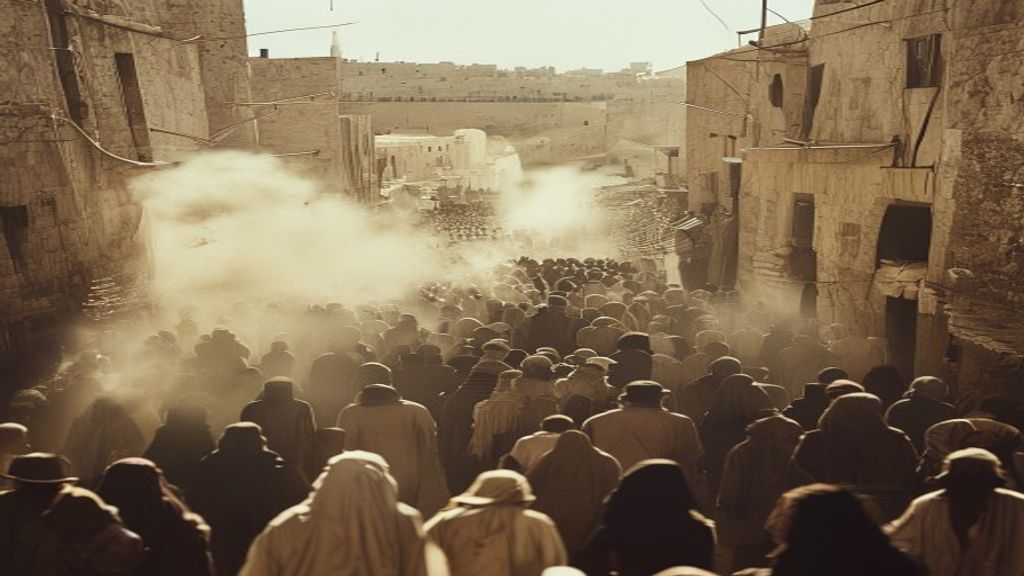
Tens of thousands of Israeli celebrants flooded Jerusalem's Old City streets today. The massive march marks a pivotal anniversary in Middle Eastern history. Narrow alleys became impassable as the scale of the crowd grew.
While many gathered to commemorate the 1967 war, the energy turned volatile. The sheer density of the procession transformed the ancient district into a site of intense friction. We look inside the most vocal demonstrations and the rising tensions on the ground.
Massive Crowds Converge for Jerusalem Day
Tens of thousands of Israeli celebrants marched through the streets of the Old City. The scale of the crowd filled the narrow alleys of Jerusalem. This annual event marks a central moment in the local calendar.
Participants gathered to observe Jerusalem Day. The march has been a fixture of the city since 1968[1]. It serves as a large-scale commemoration of the city's status.
Crowds moved in dense waves through the historic gates. The sheer number of people made movement difficult for those not part of the procession. It was a massive display of presence.
Many of those walking were part of the large crowds of ultranationalist Jews[2]. They moved through the heart of the ancient district. The atmosphere was heavy with the weight of the occasion.
A legacy of 1967
The march celebrates a pivotal moment in Middle Eastern history. It specifically commemorates the capture of the Old City[1] during the 1967 Arab-Israeli war. For many participants, the streets of Jerusalem represent a living memorial to that conflict.
This annual event has deep roots in the decades following the war. The event was established in 1968[1] to mark the anniversary of the territorial changes. It has since become a fixed date on the Israeli calendar.
History defines the route.
As the crowds move through the ancient gates, they trace the path of the 1967 military advance. The significance of the day lies in the permanent shift in control over the holy sites. This transition remains the central focus of the entire demonstration.
Tensions Rise Amid Controversial Demonstrations
Ultranationalist groups led the most vocal parts of the march. These crowds moved through the narrow streets of the Old City with intense energy. Their presence changed the atmosphere of the annual event.
Large groups of ultranationalist Jews[2] marched through the historic quarters. Many participants carried flags and shouted slogans. The noise echoed against the ancient stone walls.
Some of the chants were highly inflammatory. Participants were heard shouting slogans such as 'death to Arabs.' These words caused immediate concern for local stability.
Friction grew as the procession continued.
The use of such language adds weight to the ongoing Israeli-Palestinian conflict[3]. It makes the political situation in the region even more fragile. Observers noted the heightened risk of further unrest.
Security forces monitored the crowds closely. They watched for any signs of physical confrontation between different groups. The tension remained high throughout the afternoon.
Security forces remain stationed throughout the historic quarters to manage the crowd. Local authorities are monitoring the area for any signs of physical confrontation. The stability of the region depends on how these tensions settle in the coming days.