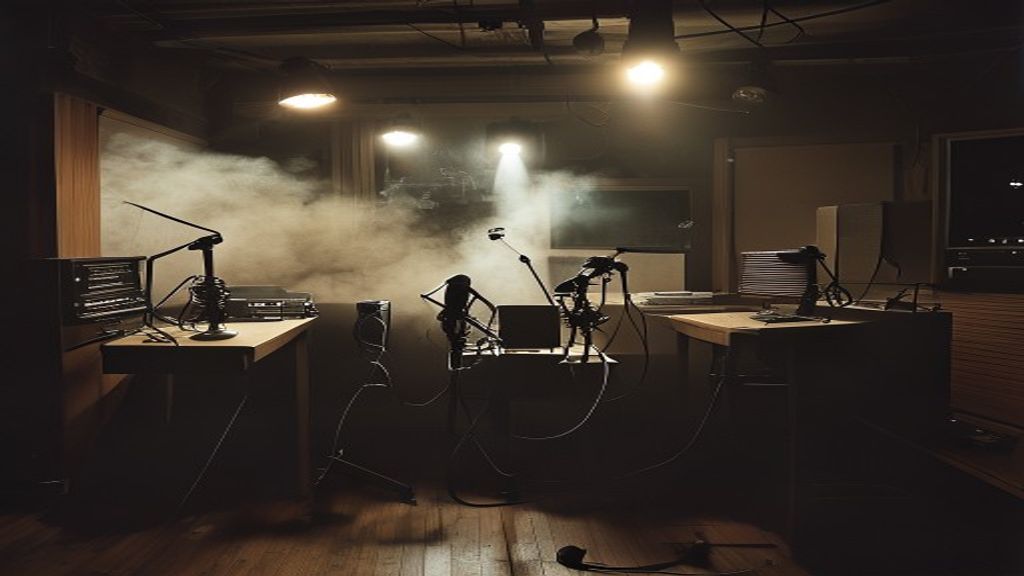
The sudden closures cut off vital news for thousands of listeners. A systematic pattern of pressure is dismantling Afghanistan's independent media landscape. These closures are not isolated incidents. A growing trend of state-led suppression is making it harder for any unapproved voice to reach the airwaves. As the central leadership in Kabul tightens its grip, the loss of these stations leaves a massive information vacuum. The public is left with only state-approved sources, leaving remote communities and vulnerable populations without a reliable way to access independent news.
The immediate silence
Taliban security forces shut down three radio stations in Kabul this week. The move cuts off a primary news source for thousands of listeners. It also signals a sharp escalation in the regime's control over information. No warning was given to the staff before the raids began. Security personnel arrived at the stations early in the morning. They seized broadcasting equipment and locked the doors. The sudden silence left listeners confused and angry. Many had tuned in expecting their usual morning programs. Instead, they heard only static or dead air. The closures affect outlets that broadcast in Dari and Pashto. These languages are the main means of communication in Afghanistan. The loss of these voices creates a vacuum in local news. Independent reporting is already scarce in the country. This action removes even more options for the public. The Taliban has not provided a detailed list of the stations. Reports suggest they were independent or semi-independent outlets. Some had previously operated with limited government oversight. The raids targeted their studios and transmission centers. Staff members were not allowed to pack their personal items. Security forces took control of the premises immediately. The speed of the operation suggests careful planning. It was not a spontaneous decision by local officials. The central leadership in Kabul likely ordered the closures. This aligns with previous moves against media freedom. The regime seeks to eliminate any unapproved voices. Radio remains a vital tool for reaching rural areas. Many Afghans lack access to the internet or television. They rely on radio for news and entertainment. Shutting down these stations isolates remote communities. It also limits the flow of information during crises. The Taliban claims the closures are necessary for public order. They cite the need to enforce strict Islamic law. Authorities argue that some content was inappropriate. They say the stations broadcast material against Sharia. This justification has been used repeatedly in the past. It often serves as a pretext for political repression. The specific violations were not detailed in official statements. No charges were filed against the station managers. The lack of transparency fuels suspicion among journalists. Many fear the next target could be their own outlet. The raids create a climate of uncertainty. Staff members are now without jobs or income. The financial impact is immediate and severe. Radio work is one of the few stable jobs left. The loss of these positions affects entire families. The stations employed engineers, producers, and presenters. Some had worked in the industry for decades. Their expertise is now locked inside closed studios. The equipment seized includes transmitters and microphones. These items are difficult to replace in the current economy. Import restrictions make new gear nearly impossible to buy. The stations may never reopen under their current names. The Taliban often bans former staff from returning. This prevents any quick revival of the operations. The silence is not just technical. It is a deliberate act of suppression. The regime wants to control the narrative completely. Any deviation from the official line is punished. The raids serve as a warning to others. They show that no outlet is safe from closure. The message is clear and unambiguous. Dissent will not be tolerated in the airwaves. The public is left with only state-approved sources. These sources offer a narrow view of reality. They focus on government achievements and religious edicts. Critical reporting is absent from the broadcast spectrum. The diversity of opinion has vanished from the air. Listeners are now fed a single perspective. This limits their ability to form independent views. It also reduces accountability for government actions. Without a free press, abuses go unreported. The raids undermine trust in all media institutions. Even state outlets face skepticism from the public. People know the news is filtered and censored. This leads to a reliance on rumors and gossip. Misinformation spreads quickly in the absence of facts. The social fabric is weakened by this lack of truth. Communities become more polarized and fearful. The immediate silence is deafening to those who care. It represents a loss of freedom and choice. The staff members are now facing an uncertain future. Some may flee the country to avoid detention. Others will try to find work in other sectors. The media industry in Afghanistan is shrinking rapidly. Each closure makes it harder for survivors to operate. The pressure is mounting on every remaining journalist. They must decide whether to self-censor or risk everything. The stakes have never been higher for the profession. The raids in Kabul are a stark reminder of that reality. The airwaves are now quieter than before. The voices that once challenged the status quo are gone. Their absence is felt by everyone who listens. The silence is a tool of control. It is also a symptom of a deeper crisis. The future of independent media in Afghanistan is bleak. The current trajectory points toward total state monopoly. The three stations are just the latest victims. Their closure marks a low point in press freedom. The world has watched this decline with concern. But little has been done to stop it. The silence continues to grow in Kabul. The staff wait for news that may never come. Their equipment sits idle in secure warehouses. The transmitters remain dark and unused. The airwaves are empty of independent voices.
A pattern of pressure
The recent closures are not isolated incidents. They are the latest chapter in a systematic dismantling of Afghanistan’s independent media since the Taliban seized power in 2021. The landscape has changed drastically. What was once a vibrant, diverse press is now a tightly controlled information zone. The silence in Kabul is the result of years of sustained pressure.
The numbers tell a stark story. In 2024 alone, the Taliban shut down at least 12 media outlets, both public and private 12 outlets closed in 2024[2]. This figure does not include the dozens of websites blocked or the countless journalists forced into exile. The trend has been consistent. Each year, the net tightens. The state removes any voice that does not align with its strict interpretation of Islamic law.
The Ministry for Propaganda and Information drives this policy. It enforces rigid content guidelines that ban criticism of the regime. Programs discussing women’s rights or democracy are specifically targeted targeting women's rights and democracy[1]. The Taliban claims these closures are necessary to eliminate content deemed un-Islamic. They argue that independent media spreads inappropriate ideas. This justification serves as a blanket excuse for censorship. Any dissent is framed as a violation of Sharia law.
Women’s voices have been erased almost entirely. Radio Femme, an all-female-run station, reached nearly 70,000 women in Afghanistan 70,000 women tuned in[3]. It provided education and awareness of rights to girls who had little access to information. Such outlets are now under constant threat. The station head of Sadai Banowan denied any violation when her station was closed. She called the shutdown a conspiracy called it a conspiracy[5]. Her denial was ignored. The station went dark.
The impact on journalists’ safety is profound. Fear has replaced editorial independence. Self-censorship is now the norm. Reporters know that crossing the line can mean detention or worse. Seven employees of Arezo TV are currently detained in Kabul seven employees detained[2]. They face unknown charges. Their colleagues watch in silence. The risk of arrest hangs over every newsroom.
Young editors and reporters refuse to give up. They work under the threat of constant violence. They remember darker times and fear their return fear a return to darker times[4]. Yet they continue to file stories. They document the truth. They do so at great personal cost. Their courage is notable. It is also dangerous. The state views their persistence as defiance.
The contrast with the pre-2021 era is sharp. Before the Taliban takeover, Afghanistan had a lively media scene. Multiple outlets competed for audiences. Journalists investigated corruption. They held power to account. That diversity is gone. Today, the airwaves carry only state-approved messages. The variety of perspectives has vanished. The public is left with a single narrative.
Press freedom organizations have documented this decline. Reporters Without Borders highlights the severity of the crackdown. They note that Afghanistan’s press freedom index has hit its lowest point. The data supports the on-the-ground reality. The closures are part of a broader strategy. The goal is total control over information. The state wants to shape public perception. It wants to eliminate alternative viewpoints.
The Ministry for Propaganda and Information holds the keys. It decides who speaks and who stays silent. Its power is absolute. There is no appeal process. There is no oversight. The decisions are final. Journalists learn quickly. They adapt or they disappear. The choice is stark. The consequences are severe.
This pattern of pressure serves a clear purpose. It isolates the population. It limits access to outside news. It reinforces the regime’s authority. By controlling the narrative, the Taliban maintains power. They suppress dissent. They silence critics. The media crackdown is a tool of governance. It is also a tool of survival. The regime knows that information is power. It seeks to monopolize that power.
The human cost is high. Hundreds of media workers have lost their livelihoods. Families struggle to survive. The profession has been decimated. Many journalists have fled the country. Those who remain live in fear. They wonder if they will be next. The uncertainty is paralyzing. It stifles creativity. It kills curiosity. It breeds caution.
The international community has watched this unfold. Condemnation is common. Action is rare. Sanctions have limited impact. Diplomatic pressure yields little. The Taliban remains defiant. It ignores external criticism. It prioritizes internal control. The world looks on. It sees the decline. It does little to stop it.
The silence in Kabul is deafening. It is not natural. It is manufactured. It is the result of deliberate policy. The state has engineered this quiet. It has removed the noise. It has cleared the airwaves. What remains is a vacuum. A vacuum that the regime fills with its own voice. A voice that allows no interruption. A voice that demands obedience.
The pattern is clear. The pressure is constant. The result is predictable. Independent media cannot survive in this environment. It is too risky. It is too costly. It is too dangerous. The closures are a warning. They are a message. They are a demonstration of power. The state shows it can act. It shows it will act. It shows it has no limits.
Journalists know this. They feel it. They see it. They live it. Every day. Every hour. Every minute. The threat is real. The danger is present. The fear is justified. They write with one eye on the door. They speak with one eye on the camera. They report with one eye on the future. That future looks bleak. It looks dark. It looks silent.
The crackdown continues. The closures mount. The pressure builds. The resistance fades. The state wins. For now. The question is not if it will continue. The question is how far it will go. How many more outlets will close? How many more journalists will be detained? How many more voices will be silenced? The answers are unknown. The trend is clear. The direction is set. The path is dark.
What happens next
The immediate question is not whether more stations will close. It is when. The Taliban has already demonstrated a clear pattern of expanding control over information flows. The three closures in Kabul are not isolated incidents. They are part of a systematic effort to silence independent voices. The next step is likely a wider crackdown. New regulations are being drafted. Deadlines for media licenses are looming. The pressure is mounting.
Seven employees of Arezo TV remain detained in Kabul. Their fate is unknown.[2] The station head denied any violation. He called the closure a conspiracy. He argued there was no need for the shutdown.[5] The authorities did not respond to his claims. The staff wait in silence. The transmitters remain dark.
The Taliban justifies these actions by citing strict Islamic law. They claim the closures eliminate content deemed inappropriate.[1] This reasoning targets programs discussing women's rights. It also bans any content not aligned with their interpretation of Sharia law. The scope of "inappropriate" is broad.[1] It includes music. It includes news analysis. It includes basic human rights discussions. The definition shifts to suit the regime's needs.
Nearly 70,000 women in Afghanistan tune in to Radio Femme. This station brings education and awareness to girls.[3] It is an all-female-run outlet. It operates both online and via traditional broadcast. The closure of similar stations cuts off this lifeline. Women lose access to vital information. They lose a platform for their voices. The impact is immediate. The impact is severe.
Young editors and reporters refuse to give up. They face constant violence. They face the threat of detention.[4] They work in fear. They work in secret. The risk is high. The cost is higher. Many have fled the country. Those who remain operate in the shadows. They self-censor to survive. They avoid topics that could trigger a raid. The line between reporting and resistance is blurred.
The average Afghan citizen is now more isolated than ever. Access to diverse news sources has collapsed. Misinformation fills the void. Rumors spread faster than facts. The state media dominates the airwaves. It broadcasts only the regime's perspective. Independent analysis is gone. Critical debate is silenced. The public square has shrunk to a single voice.
The next deadline is unclear. New media regulations are under review. License renewals are pending. The Taliban has not announced a timeline. The uncertainty is a tool. It keeps journalists on edge. It keeps stations guessing. One day they broadcast. The next day they are closed. There is no warning. There is no appeal process. The system is designed to intimidate.
The staff of the closed stations are still waiting. Some are free. Some are detained. All are uncertain. Their equipment is seized. Their offices are locked. Their futures are in limbo. The transmitters sit idle. The frequencies are silent. The airwaves are empty. The silence is loud. It is heavy. It is suffocating.
The world watches. The world waits. The world wonders. Will the pressure increase? Will the crackdown spread? Will more voices be silenced? The answers are not yet known. The trend is visible. The direction is clear. The path is narrowing. The space for independent media is shrinking. The stakes are rising. The risks are growing. The situation is dire.
The next move belongs to the Taliban. They hold the power. They hold the keys. They hold the licenses. They decide who speaks. They decide who is heard. They decide who is silenced. The journalists have little leverage. They have little protection. They have little hope. They have only their resolve. They have only their truth. They have only their words.
The transmitters remain dark. The staff wait. The silence continues. The pressure builds. The crackdown deepens. The isolation grows. The misinformation spreads. The voices fade. The future is uncertain. The present is harsh. The reality is stark. The fight continues. The struggle persists. The resistance endures. The hope remains. The truth survives. The story goes on.
The next step is likely a wider crackdown. New media regulations are being drafted and license renewals are pending. The future of independent media in Afghanistan depends on whether any journalists can survive the increasing pressure.