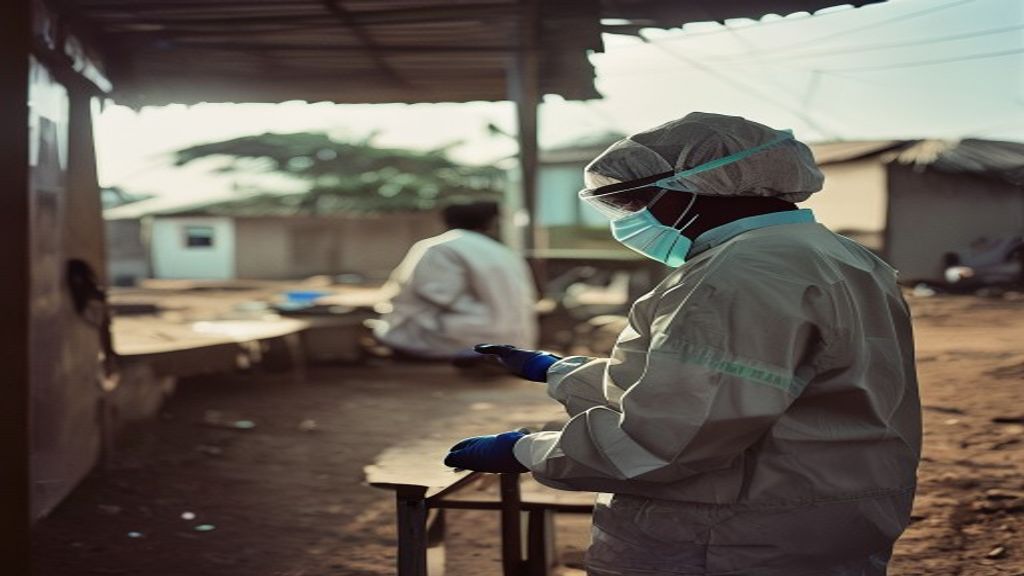
The World Health Organization declared a global health emergency on 17 May 2026. This marks the first time the agency has invoked its highest alert level for an Ebola outbreak in nearly a decade. Health officials confirmed the virus was spreading across borders into Uganda.
Why Case Numbers May Rise Before Falling
Case counts will likely climb before they drop. This counterintuitive trend is part of the response strategy. Health officials are expanding testing and surveillance networks. More eyes on the ground mean more cases found. It looks like a surge. It is actually progress.
Prof Mohamed Janabi explained the logic at the briefing. He told attendees that detection drives the early numbers. "As we scale up our detection and response, we expect to see more cases initially before the curve begins to go down," he said[2]. The quote clarifies the timeline. The rise is temporary. The fall is inevitable if the response holds.
Nigeria Health Watch attended the briefing. Their presence signals regional concern. Neighboring countries watch the data closely. They want to know if the virus spreads. They want to know if the response works. The briefing offered a roadmap. It did not offer false comfort.
The strategy relies on finding hidden cases. Many infections go unreported in remote areas. Communities may hide symptoms due to fear. Health workers must build trust to find them. Testing kits are being distributed widely. Mobile clinics are moving into villages. Each new test adds to the total. The total rises. That is the goal.
Finding a case stops a chain. An undetected patient infects others. A detected patient is isolated. Their contacts are traced. Their contacts are monitored. The chain breaks. The math favors early detection. One found case prevents ten future ones. The short-term spike saves lives later.
The curve must bend downward eventually. Officials expect this shift within weeks. The timeline depends on community cooperation. It depends on supply chain reliability. It depends on safe burial practices. Every delay prolongs the rise. Every success accelerates the fall.
Surveillance teams are mapping transmission routes. They track movement across borders. They monitor market gatherings. They watch funeral rites. These are high-risk moments. Interventions target these specific points. Masks are distributed. Handwashing stations are built. Social distancing is enforced. The measures are simple. They are effective.
Data flows back to central command. Analysts update the models daily. They adjust resource allocation based on trends. If a cluster appears, teams deploy. If a zone clears, resources shift. The system is dynamic. It adapts to the virus. It does not wait for the worst.
The public must understand the numbers. A rising count does not mean failure. It means the net is widening. It means the system is working. Misinformation can undermine trust. Rumors spread faster than facts. Officials are countering this with clear messaging. They explain the rise. They promise the fall.
Health workers face the front line. They wear protective gear for hours. They work in heat and humidity. They risk their own safety. Their dedication drives the detection effort. Without them, the strategy fails. With them, the curve bends. They are the key variable.
The virus does not negotiate. It spreads silently. It waits for gaps in the defense. The response must be relentless. It must be precise. It must be fast. The initial rise is a test. The eventual fall is the reward. The work continues.
The Challenge of the Bundibugyo Virus
The Bundibugyo virus is a rare and deadly strain. It has caused only two other known outbreaks in history. This scarcity makes it uniquely difficult for health teams to prepare. Most Ebola responses rely on data from the more common Zaire species. That experience does not translate directly here. The virus behaves differently. It spreads through a distinct zoonotic cycle involving bats. This wildlife link complicates containment efforts significantly.
Health workers face a steep learning curve. They must identify cases quickly. They must trace contacts efficiently. They must isolate patients safely. The virus does not wait for them to adapt. It moves through communities with lethal speed. The case fatality rates for Bundibugyo are high. Survivors are the exception, not the rule. This reality weighs heavily on local clinics.
The Democratic Republic of the Congo has faced many outbreaks. This is the country's 17th Ebola crisis since 1976. Previous waves taught hard lessons. They showed the value of rapid testing. They highlighted the need for community trust. But this strain presents new hurdles. The bat reservoir remains in the environment. It cannot be vaccinated or contained like humans. The virus waits in the wild. It jumps to people when defenses slip.
Scientists describe the challenge as unique. The treatment protocols are still evolving. Researchers are studying the viral load. They are monitoring patient outcomes closely. The data from this outbreak will inform future responses. Every case adds to the global understanding. Every death highlights the urgency. The stakes could not be higher.
Local health systems are under immense pressure. Supplies must reach remote areas fast. Staff must work long hours. They face exhaustion and fear. The community must cooperate fully. Rumors spread quickly in crises. Misinformation can kill as fast as the virus. Trust is the first line of defense. It is also the hardest to build.
The geography adds another layer of difficulty. The region is dense and forested. Roads are often unpaved. Rain can cut off access entirely. Teams must travel on foot sometimes. They carry samples by hand. They set up labs in makeshift shelters. Conditions are brutal. The work is relentless.
Bats play a central role in transmission. They carry the virus without getting sick. They move freely across borders. They hide in trees and caves. Eradicating them is impossible. Controlling their movement is equally hard. Health officials focus on human-to-human spread instead. They break chains of transmission. They isolate the sick. They protect the healthy.
The rarity of the virus is a double-edged sword. Fewer cases mean less historical data. Less data means more uncertainty. Uncertainty slows decision-making. It creates gaps in the response. Experts must improvise. They rely on general Ebola principles. They adapt them to this specific threat. The margin for error is slim.
Previous outbreaks in the region were devastating. They killed thousands of people. They disrupted economies and schools. They strained international aid networks. This time, the response is faster. Detection tools are better. Vaccines exist for other strains. But no vaccine is approved for Bundibugyo yet. That leaves patients vulnerable. It leaves families grieving.
The virus exploits every weakness. It targets the unvaccinated. It spreads in crowded homes. It hides in funeral rites. It moves with travelers. It waits in hospitals. It requires constant vigilance. One missed contact can restart the chain. One broken protocol can cost lives. The pressure is constant.
Health teams work around the clock. They test samples. They trace contacts. They educate communities. They provide care. They manage fear. They coordinate with governments. They report to global agencies. The effort is massive. It involves thousands of people. It spans multiple countries. It costs millions of dollars.
The goal is clear. Stop the spread. Save lives. Prevent a pandemic. The path is unclear. The virus is elusive. The terrain is hostile. The resources are stretched. The clock is ticking. Every hour counts. Every case matters. Every death is a failure. The response must be perfect. It cannot afford mistakes.
Scientists monitor the viral evolution. They look for mutations. They check for drug resistance. They study transmission patterns. They publish findings rapidly. The global community watches closely. They share data openly. They collaborate across borders. The science is fast. The politics are slow. The virus ignores both.
Local leaders play a key role. They mobilize resources. They enforce quarantines. They calm fears. They support health workers. They bridge cultural gaps. They listen to communities. They adapt strategies locally. One size does not fit all. Flexibility is essential. Trust is non-negotiable.
The outbreak tests global health systems. It reveals strengths and weaknesses. It highlights funding gaps. It shows coordination failures. It proves the value of early warning. It underscores the need for preparedness. The lessons will last for years. The scars will last longer.
Bats remain the ultimate source. They are the silent carriers. They are the hidden threat. They are the reason the virus persists. Without them, the outbreak would end. With them, the risk remains. The cycle continues. The danger lingers. The world watches. The response continues.
The challenge is immense. The stakes are life and death. The work is hard. The reward is survival. The virus is rare. It is deadly. It is persistent. It demands respect. It demands action. It demands speed. The teams are ready. They are tired. They are determined. They will not stop.
The data will tell the story. The numbers will rise. Then they will fall. The curve will bend. The outbreak will end. But the memory will stay. The lessons will remain. The preparedness will improve. The next time will be different. The response will be better. The outcome will be safer. The world is learning. The virus is waiting. The race is on.
rare Ebola-causing Bundibugyo virus[4] poses unique threats. zoonotic transmission cycle involving bats[2] complicates containment. 17th Ebola outbreak since 1976[3] highlights historical context. high case fatality rates[1] drive urgency.
Taken together, these threads sketch where the story stands today. On the record, An outbreak of Ebola disease caused by the Bundibugyo virus (BDBV) occurred in the Ituri Province of the Democratic Republic of the Congo and Uganda. The next chapter will be written by the choices the principal parties make in the days ahead. Readers can expect more clarity as new reporting tests what is still provisional.